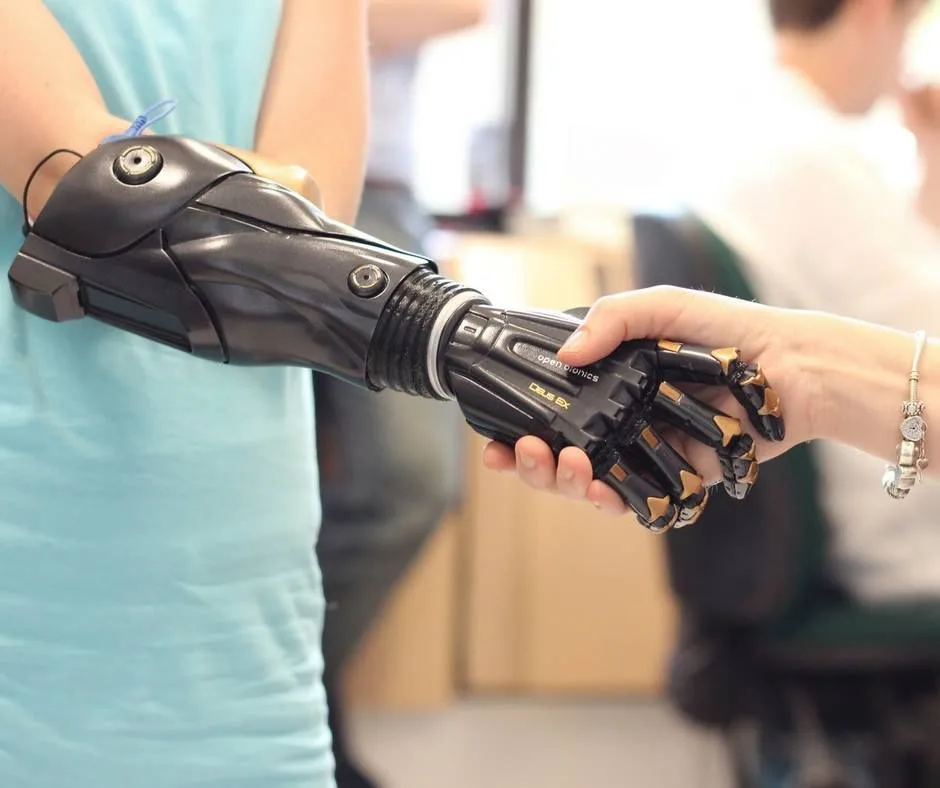
Upper Limb Prosthetics in Abu Dhabi, UAE
Personalized Hand, Arm & Functional Prosthetic Solutions
Quantum Medical provides upper limb prosthetic solutions designed around individual anatomical, functional, and personal requirements. Based in Abu Dhabi, UAE, we offer prosthetic solutions for different levels of upper limb loss, including partial hand, wrist disarticulation, below-elbow, and above-elbow applications. Our approach combines individualized device planning, appropriate component selection, and relevant design technologies to support patients and healthcare professionals.
What Are Upper Limb Prosthetics?
Upper limb prostheses are artificial devices designed to replace missing portions of the hand, wrist, forearm, or upper arm. Depending on their design, these devices may provide cosmetic restoration, support specific activities, or assist with selected functional tasks.
Upper limb prosthetic solutions are available for different levels of limb loss and congenital limb differences. The appropriate prosthesis depends on individual anatomy, residual limb condition, functional requirements, personal preferences, and professional clinical assessment. Different systems may incorporate custom sockets, suspension mechanisms, wrist units, elbow components, and specialized terminal devices.
Responsible Clinical Practice
Prosthetic devices do not guarantee full restoration of natural hand movement or unrestricted independence. Not every person with upper limb loss requires or prefers prosthetic use; outcomes depend on residual anatomy, personal goals, and clinical guidance.
Understanding Upper Limb Prosthetic Options
Upper limb prosthetic systems are available in different designs depending on their intended purpose, control method, and individual functional requirements. Prosthetic options encompass passive, body-powered, myoelectric, hybrid, and activity-specific designs.
Passive & Cosmetic Prostheses
Designed primarily for anatomical appearance, body symmetry, and selected stabilization tasks. Crafted from medical-grade silicones or lightweight polymers to match natural skin tone and contours without active powered gripping.
Key Considerations:
- Cosmetic hand and digit restoration
- Natural anatomical appearance and symmetry
- Selected passive object stabilization
- Lightweight everyday comfort
Body-Powered Upper Limb Prostheses
Utilize body movements—such as shoulder protraction or scapular abduction—transferred through a mechanical harness and cable system to operate terminal hooks, hands, or locking elbow mechanisms.
Key Considerations:
- Direct tactile feedback through cable tension
- Durable mechanical operation in demanding environments
- Voluntary opening or voluntary closing terminal devices
- Independent of external battery power
Myoelectric Upper Limb Prostheses
Incorporate surface electromyographic (EMG) sensors placed over residual muscle sites. Detected microvolt muscle signals are processed by an on-board controller to drive battery-powered motorized hands, wrists, or elbows.
Key Considerations:
- Muscle-signal-governed motorized gripping
- Multiple functional grip configurations
- Minimal harness requirements for suspension
- Requires dedicated muscle isolation training
Hybrid Prosthetic Systems
Combine different operating technologies within a single device configuration—such as pairing a lightweight body-powered mechanical elbow with an externally powered myoelectric terminal hand to optimize weight and control.
Key Considerations:
- Weight optimization for higher amputation levels
- Simultaneous multi-joint control capability
- Tailored compromise between durability and precision
- Prescribed following individual biomechanical review
Activity-Specific Prosthetic Solutions
Engineered with specialized adapters, quick-disconnect wrists, and task-oriented terminal attachments to support designated occupational, recreational, sports, tool handling, or artistic requirements.
Key Considerations:
- Vocational tool handling and specialized trade tasks
- Recreational and sports activities (e.g., cycling, gym)
- Water-resistant and rugged task attachments
- Designed to supplement primary daily devices
Our Upper Limb Prosthetic Solutions
Different levels of upper limb loss require different prosthetic designs, control options, and fitting approaches. Quantum Medical's existing portfolio includes solutions addressing partial hand loss, wrist disarticulation, and below-elbow and above-elbow prosthetic requirements across two clinical groups.
Partial Hand, Finger & Wrist Prosthetic Solutions
Distal upper limb prostheses are developed for individuals with limb loss affecting the fingers, hand, or wrist. Device selection depends on remaining anatomy, intended function, and personal preferences.
Partial Hand & Finger Prostheses
Personalized prosthetic solutions developed for selected cosmetic and functional requirements following partial hand or individual finger loss. Tailored using anatomical medical silicone, passive support structures, or mechanical articulated digit assemblies.
Key Considerations:
- High-definition anatomical silicone matching skin tone
- Stabilization of objects during two-handed activities
- Protection of sensitive residual tissue and nerve endings
- Restoration of natural hand contour and proportion
Wrist Disarticulation Prosthetic Solutions
Engineered for individuals with limb loss through the wrist joint. Socket designs utilize the retained forearm length and distal styloid contours to support anatomical suspension and functional rotation where available.
Key Considerations:
- Low-profile socket geometry accommodating distal forearm length
- Anatomical styloid flare suspension reducing harness needs
- Compact wrist units preserving functional limb length
- Compatibility with passive, body-powered, and powered devices
Below-Elbow & Above-Elbow Prosthetic Solutions
Below-elbow and above-elbow prosthetic systems require different socket designs, component configurations, and control strategies based on the level of limb loss and personal functional goals.
Below-Elbow (Transradial) Prostheses
Customized transradial prosthetic solutions incorporating appropriate socket, suspension, wrist component, and terminal device options according to individual requirements, available muscle control, and personal goals.
Key Considerations:
- Custom flexible inner socket with rigid carbon-frame lamination
- Suction, anatomical suspension, or self-suspending Muenster designs
- Passive, cable-driven, or myoelectric sensor-driven control
- Quick-disconnect and friction wrist units for easy tool exchange
Above-Elbow & Elbow Disarticulation Prostheses
Comprehensive multi-joint systems for transhumeral or elbow disarticulation levels, coordinating custom humeral socket interfaces, mechanical or powered elbow joints, forearm structures, and terminal devices.
Key Considerations:
- Anatomically distinct design for transhumeral vs elbow disarticulation
- Mechanical friction, locking, or externally powered elbow joints
- Body-powered dual-cable harness or myoelectric switch control
- Hybrid configurations balancing functional speed and device mass
Understanding Upper Limb Prosthetic Components
Upper limb prosthetic systems may incorporate different components depending on the level of limb loss and intended function. The configuration is selected according to individual requirements.
Prosthetic Socket
Provides the anatomical interface between the residual limb and the device, prioritizing fit, pressure tolerance, and stability.
Suspension Systems
Harnesses, anatomical contours, or suction sleeves that securely couple the prosthesis to the body during movement.
Wrist Components
Provide selected positioning, rotation, or quick-disconnect attachment functions for terminal devices.
Prosthetic Elbows
Mechanical locking or externally powered elbow units providing flexion and stability for transhumeral levels.
Terminal Devices
The functional working end of the prosthesis, including cosmetic hands, mechanical hooks, or task-specific tools.
Personalized Upper Limb Prosthetic Design
Upper limb prosthetic development requires careful consideration of residual limb anatomy, device purpose, control requirements, and personal preferences. Depending on device type, digital technologies support design and fabrication alongside certified hands-on clinical assessment and fitting.
Anatomical Assessment
Measurement of residual limb geometry, skin resilience, range of motion, and muscle signal sites.
Digital Design & CAD Modeling
Computer-assisted tools support socket modification, volume adjustment, and component integration.
Device Fabrication
Carbon composite laminations, lightweight polymers, and specialized silicone preparation by technicians.
Fitting & Adjustments
Evaluating socket comfort, harness tension, sensor contact, and functional range of motion.
From Assessment to Personalized Prosthetic Support
Developing an upper limb prosthesis involves understanding the individual's anatomical, functional, and personal goals through a structured five-stage pathway.
Assessment & Requirements
Reviewing residual limb anatomy, range of motion, muscle signals, and personal daily goals.
Prosthetic Planning
Considering appropriate control options (passive, body-powered, or myoelectric) and components.
Design & Fabrication
Preparing check sockets and definitive composite laminations using certified methods.
Fitting & Control Training
Reviewing socket fit, harness comfort, electrode placement, and initial device operation.
Adaptation & Follow-Up
Coordinating with rehabilitation teams, monitoring wear progress, and arranging routine servicing.
Who May Consider Upper Limb Prosthetic Solutions?
Upper limb prostheses may be considered for individuals with different types and levels of limb loss. Candidacy depends on individual health, residual limb anatomy, personal goals, and clinical assessment.
Trauma-Related Limb Loss
Individuals experiencing limb loss following industrial, workplace, or motor accidents assessed for progressive prosthetic recovery.
Congenital Limb Differences
Children and adults with congenital transverse or longitudinal upper limb differences exploring passive, functional, or activity-specific devices.
Post-Surgical Limb Loss
Patients undergoing limb loss following specialized oncological resections or complex infections requiring tailored prosthetic interfaces.
Functional & Cosmetic Requirements
Individuals seeking realistic high-definition cosmetic restoration or task-specific tool attachments for work and hobbies.
Supporting Functional Goals & Prosthetic Adaptation
Upper limb prosthetic rehabilitation involves learning how to position, control, and use a device for selected daily activities in coordination with occupational therapists and certified prosthetists.
Functional Assessment
Understanding personal goals, baseline residual limb capabilities, and activity requirements.
Device Control Training
Learning how to operate mechanical cable harness systems or isolate myoelectric muscle signals.
Daily Activity Adaptation
Exploring two-handed coordination, utensil holding, and modified strategies for personal tasks.
Follow-Up & Adjustments
Reviewing socket fit, electrode impedance, cable tension, and evolving user requirements.
Prosthetic Fit, Comfort & Follow-Up
Appropriate socket fit, residual limb hygiene, and structured reviews are essential for sustained comfort, skin integrity, and reliable operation of upper limb prosthetic devices.
Socket Fit & Comfort
A socket should feel secure without pin-point pressure on bony landmarks. Seek review for persistent redness.
Residual Limb Care
Daily inspection of sensitive skin, maintaining hygiene, and managing minor volume changes appropriately.
Device Maintenance
Cleaning socket surfaces, keeping electronic charging ports dry, and avoiding unauthorized screw modifications.
Regular Follow-Up
Periodic reviews evaluate cable wear, battery condition, electrode contact, and evolving user requirements.
Supporting Upper Limb Prosthetic Care Across the UAE
Quantum Medical welcomes collaborative partnerships with healthcare professionals involved in upper limb prosthetic care, reconstructive surgery, and occupational rehabilitation. Our approach emphasizes individualized device planning, appropriate technical support, and transparent communication across hospital and outpatient teams.
Reconstructive Surgical Alignment
Collaboration with orthopedic and plastic reconstructive surgeons to evaluate residual limb healing and timing for diagnostic fitting.
Occupational Therapy Integration
Coordinated training milestones with occupational therapists during diagnostic socket trials and functional task training.
In-House Digital Fabrication
Custom composite socket engineering and modular component integration completed directly within our Abu Dhabi facility.
Frequently Asked Questions About Upper Limb Prosthetics
Clear, medically responsible answers to common inquiries regarding upper limb prosthetic systems, components, and fitting.
Explore Related Prosthetic & Orthotic Solutions
Looking for an Upper Limb Prosthetic Solution?
Whether you are a healthcare professional exploring prosthetic options or an individual seeking information about personalized hand and arm prosthetic solutions, Quantum Medical welcomes your enquiry.