Custom Wheelchair Seating in Abu Dhabi, UAE
Personalized Seating, Postural Support & Pressure Management Solutions
Quantum Medical provides customized seating and positioning solutions for individuals with different mobility, postural, and rehabilitation needs. Based in Abu Dhabi, UAE, our solutions include custom-contoured seating systems, postural accessories, and selected pediatric mobility equipment. Our approach focuses on individualized seating requirements, appropriate support, and compatibility with relevant mobility equipment.
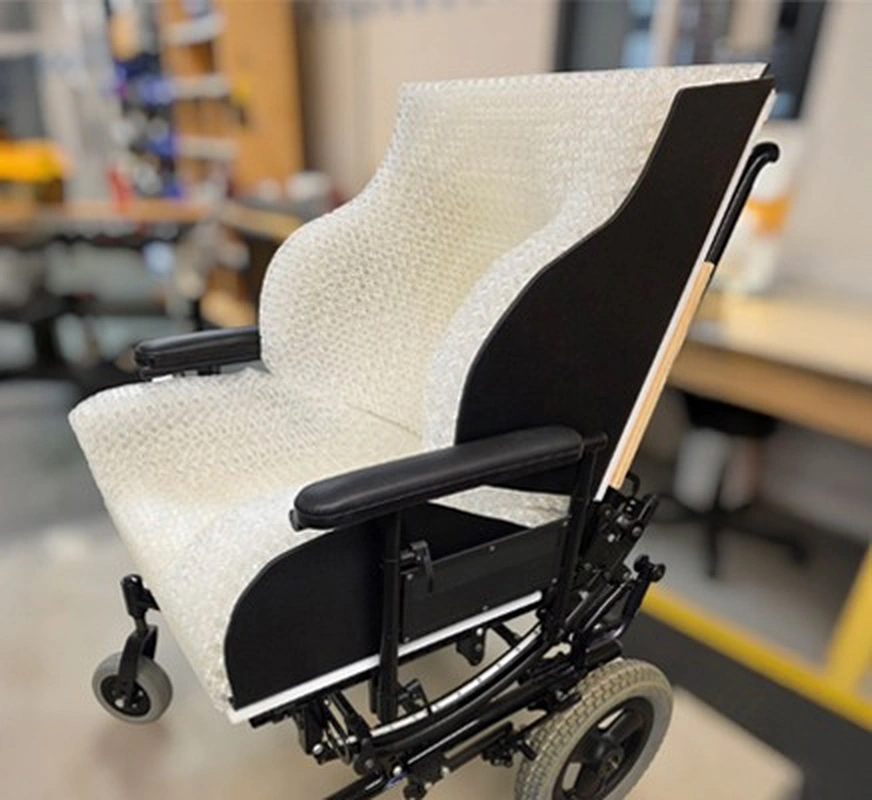
What Are Custom Seating & Postural Support Systems?
Custom seating systems are specialized seating solutions designed to accommodate individual anatomical, postural, and mobility requirements. These systems may include contoured seat cushions, custom backrests, pelvic positioning supports, lateral trunk supports, and other modular accessories.
Individuals with complex neuromuscular, musculoskeletal, or developmental conditions often require specialized seating beyond standard wheelchair cushions. Depending on their design, custom seating solutions support appropriate positioning, pressure redistribution, and selected functional activities.
The appropriate seating configuration depends on clinical assessment, pelvic and trunk positioning, skin condition, mobility needs, and daily functional activities.
Individualized Seating Design
Tailored contouring matching unique anatomical landmarks, accommodating asymmetry, and supporting sitting balance.
Pelvic & Trunk Support
Structured stabilization to help maintain neutral or supported pelvic alignment and reduce trunk fatigue.
Pressure Redistribution
Distributing seated load across broader surface areas to help offload high-risk bony prominences.
Wheelchair Integration & Adjustability
Compatible hardware engineered to mount securely to selected manual and powered wheelchair platforms.
Realistic Goals for Postural Seating
Custom seating systems do not guarantee the total prevention of all pressure injuries, nor can they reverse fixed structural spinal deformities. The primary clinical objective is to support optimal postural alignment, redistribute pressure over available surface areas, and accommodate anatomical presentation to enhance comfort and functional participation.
Understanding the Importance of Individualized Seating
Appropriate seating is essential for individuals who spend extended periods in a wheelchair or require structured postural support. Seating configuration directly influences body alignment, contact pressure, physical stability, and access to daily activities.
Pelvic Positioning
The pelvis is the foundation of seated posture. Proper contouring helps manage posterior tilt, anterior tilt, rotation, and pelvic obliquity.
Trunk Support
Lateral supports and contoured backrests provide mid-line thoracic stabilization, helping reduce fatigue and secondary scoliotic tendencies.
Pressure Management
Anatomical shape relief offloads vulnerable bony landmarks (ischial tuberosities, sacrum) and transfers loading toward the trochanters and thighs.
Functional Participation
Stable seated balance enables freer upper extremity movement for self-propulsion, desk work, feeding, eye contact, and communication.
Our Custom Seating & Postural Support Solutions
Different mobility and positioning requirements call for different seating solutions. Quantum Medical's existing portfolio includes pediatric rehabilitation strollers (such as the GRIZZLY special stroller), custom-contoured foam seating inserts, and modular postural positioning accessories.
GRIZZLY Pediatric Rehabilitation Stroller
The GRIZZLY Special Stroller (manufactured by MyWam) is a specialized pediatric rehabilitation mobility device engineered for children with complex movement and positioning needs. Designed with an adaptive growth system, it allows continuous adjustment of seat dimensions, tilt-in-space, backrest recline, and modular postural supports.
Adaptive Seat Dimensions
Telescopic depth and width modifications accommodate the growing child over extended developmental stages.
Tilt-in-Space Functionality
Rotates the entire seating frame backward while preserving hip angle, shifting pressure from pelvic base to back.
Reclining Backrest Angle
Allows independent adjustment of the seat-to-back angle for rest, catheterization, or postural relaxation.
Adjustable Footrest System
Adjustable in height and angle to support plantar foot contact and prevent abnormal hamstring strain.
Modular Postural Supports
Includes adjustable thoracic laterals, 5-point harness, abduction block, and multi-axis headrest options.
Vehicle Transport Guidelines
Manufacturer-documented crash-tested configurations according to specified transport and tie-down protocols.
The GRIZZLY stroller has manufacturer-documented crash-tested configurations for specified transport environments. Vehicle transport must strictly observe manufacturer tie-down securement methods and certified vehicular passenger seatbelts. Built-in postural belts and harnesses are designed solely for seated positioning and do not replace certified vehicle occupant restraints.
Custom 3D-Contoured Foam Seating Inserts
Custom-contoured foam seating inserts are developed according to individual anatomical and postural requirements. Incorporating custom-shaped seat cushions and contoured backrest inserts, these systems provide targeted positioning, pelvic alignment, and engineered pressure redistribution across supported body regions.
Anatomical Ischial Contouring
Recessed wells and medial/lateral thigh troughs relieve peak ischial pressures and stabilize femoral alignment.
Contoured Thoracolumbar Backs
Moulded backrest shells accommodate spinal curvatures, rib cage asymmetries, and provide mid-line thoracic support.
Multi-Layer Medical Foams
Engineered combinations of firm supportive base foams paired with memory-conforming viscoelastic top layers.
Removable Breathable Covers
Multi-stretch, moisture-wicking and fluid-resistant medical covers engineered to minimize skin shear and heat buildup.
Postural Belts, Harnesses & Lateral Supports
Postural seating accessories provide essential modular stabilization to maintain appropriate body alignment within the seating system according to individual clinical and functional requirements.
Pelvic Positioning Belts
Available in 2-point and 4-point configurations angled at 45° or 60° to secure anterior superior iliac spines and prevent pelvic sliding.
Thoracic Lateral Supports
Padded lateral thoracic pads with fixed or swing-away brackets to provide mid-line trunk containment and ease transfers.
Multi-Axis Head Supports
Contoured sub-occipital and lateral head pads providing adjustable cervical support, visual alignment, and swallowing ease.
Anterior Chest Harnesses
Dynamic H-harnesses or butterfly chest supports designed to prevent forward trunk collapse while allowing respiration.
Clinical & Safety Distinction: Postural positioning belts and lateral supports are designed solely for seated biomechanical alignment. They must never be used as restrictive physical restraints, nor do they serve as certified vehicular crash restraints.
Custom Seating for Manual & Powered Wheelchairs
Custom seating systems can be integrated with selected manual and powered wheelchair systems, subject to technical and clinical assessment. Compatibility depends on wheelchair frame dimensions, mounting hardware, weight capacity, and functional access.
Manual Wheelchair Seating
Integrated with active rigid or folding frames, balancing positioning stability with propulsion efficiency and transport weight.
Powered Wheelchair Seating
Configured for complex powered bases, coordinating with power tilt, recline, seat elevation, and joystick controller reach.
Rigid Mounting Hardware
Heavy-duty quick-release or fixed clamps connecting backrests and seat pans securely to wheelchair frame tubing.
Functional Access & Transfers
Hardware and side supports configured to avoid obstructing lateral sliding board transfers, standing pivots, or hoists.
Understanding Pressure Management in Seating
Individuals seated for extended periods, especially those with reduced mobility or sensory impairment, experience concentrated pressure over bony landmarks. Appropriately designed seating surfaces help redistribute load and support an individualized skin-care plan.
Pressure Redistribution
Contoured foam geometry conforms to pelvic landmarks, spreading pressure over the trochanters and thighs rather than focal points.
Routine Skin Monitoring
Daily inspection of the sacrum, coccyx, and ischial tuberosities by users or caregivers is vital to detect non-blanching erythema early.
Offloading Weight-Shifts
Seating systems complement, but do not replace, scheduled weight-shifts, tilt-in-space intervals, and prescribed repositioning.
Individual Clinical Risk Factors
Skin integrity relies on nutrition, moisture control, circulation, and tissue tolerance alongside seating ergonomics.
Clinical Reference Notice: In line with international clinical guidelines (including NICE and RESNA), no seating cushion can serve as a standalone preventative for pressure ulcers without regular scheduled repositioning, daily skin inspections, and proper moisture management.
Supporting Pelvic Positioning & Trunk Stability
Pelvic positioning is the central anchor in seated biomechanics. Custom seating aims to stabilize pelvic orientation and manage flexible postural tendencies while safely accommodating fixed skeletal asymmetries without excessive focal pressure.
Pelvic Tilt & Obliquity
Managing posterior tilt (slouching) or pelvic obliquity (one side higher) using contoured wells and build-ups to level the seating base.
Trunk Stability & Scoliosis
Providing three-point biomechanical support via lateral pads to contain flexible lateral spinal deviations during sitting.
Head Alignment for Function
Stabilizing pelvic and trunk base enables more natural head and cervical alignment, assisting respiration, swallowing, and social interaction.
Accommodating Fixed Postures
Where skeletal deformities are non-flexible (fixed), custom seating shapes contours around the deformity to prevent pain and tissue breakdown.
Understanding Tilt-in-Space & Reclining Seating
Tilt-in-space and recline are distinct mechanical functions serving specific clinical and ergonomic objectives in wheelchair and pediatric stroller systems.
Tilt-in-Space Function
Tilt-in-space rotates the entire seating system backward around a pivot point while maintaining a fixed seat-to-backrest angle. This shifts gravitational loading from the pelvic base and thighs toward the backrest, offering vital pressure relief without opening the hip angle or causing shear forces that pull the pelvis forward.
Reclining Backrest Function
Recline changes the angle between the seat pan and the backrest by tilting only the backrest backward, opening the hip angle. This function assists with daily care routines (such as catheterization), resting, or accommodating hip extension limitations, but requires clinical care to avoid shear forces along the spine.
When May Customized Seating Be Considered?
Custom seating may be considered for individuals with complex postural, neuromuscular, or mobility requirements following comprehensive professional evaluation.
Cerebral Palsy (GMFCS III–V)
Children and adults with abnormal muscle tone, spasticity, or extensor thrust require customized postural containment and pelvic stabilization.
Spinal Cord Injury & Sensory Loss
Individuals with paraplegia or tetraplegia require specialized pressure-redistributing cushions and postural stability to safeguard tissue health.
Spina Bifida & Myelomeningocele
Accommodating pelvic obliquity, lower-limb sensory deficits, and spinal kyphoscoliosis while maintaining daily functional autonomy.
Neuromuscular & Dystrophy Conditions
Progressive muscle weakness (e.g., Duchenne, SMA) requires adaptable seating that maintains posture as muscle strength changes.
Severe Kyphoscoliosis & Asymmetry
Fixed spinal deformities require contoured back shells shaped around rib humps to avoid skin breakdown and respiratory compromise.
Custom Seating Design & Foam Fabrication
Developing custom seating systems involves thorough clinical evaluation, precise anatomical measurements, digital planning, and suitable fabrication methods to produce comfortable, supportive, and durable components.
Comprehensive Assessment
Mat evaluation of pelvic mobility, spinal flexibility (flexible vs. fixed), hip range of motion, and skin history.
Measurement & 3D Capture
Collecting anthropometric data and digital 3D surface topography of pelvic, thoracic, and spinal contours.
Precision Foam Fabrication
Carving and assembling multi-layer medical foam components with designated pressure-relief wells and lateral supports.
Clinical Fitting & Review
Mounting components to the wheelchair base, assessing sitting posture, pressure distribution, and user comfort.
Adapting Seating Systems as Children Grow
Children's seating requirements naturally evolve as they grow. Changes in skeletal dimensions, muscle tone, and daily activities necessitate scheduled clinical reviews and equipment adjustments.
Growth Monitoring Reviews
Periodic reviews of leg length, seat depth, torso height, and pelvic width to ensure child is not outgrowing seating confines.
Modular Component Adjustments
Modifying telescopic seat pans, elevating footrest extensions, and repositioning lateral thoracic pads to keep pace with growth.
Changing Activity & School Needs
Reconfiguring seating hardware as the child transitions to school desks, accessible transport vehicles, or self-propulsion.
Seating Care, Skin Monitoring & Follow-Up
Appropriate seating maintenance, routine skin monitoring, and scheduled follow-up are essential considerations for wheelchair seating users and caregivers.
Daily Skin Inspection
Check for persistent redness or marks over bony points when transferring out of the chair. Seek advice if redness persists past 20–30 minutes.
Monitoring Seated Posture
Watch for gradual pelvic sliding, trunk leaning, or unfastened belts that may alter contact pressures or cause discomfort.
Cover Hygiene & Cleaning
Wash removable covers according to manufacturer label. Wipe foam surfaces with mild disinfectants; avoid soaking foam cores.
Scheduled Clinical Follow-Up
Schedule periodic reviews every 6 to 12 months (or sooner for growing children) to verify alignment and equipment integrity.
Supporting Seating & Rehabilitation Professionals Across the UAE
Quantum Medical welcomes collaboration with healthcare professionals and rehabilitation centres involved in seating and mobility across Abu Dhabi and the UAE. Our focus is on technical coordination, appropriate customization, and clear clinical communication.
Frequently Asked Questions About Custom Seating
Clear, patient-friendly and medically responsible answers to common wheelchair seating enquiries.
Explore Related Mobility & Rehabilitation Solutions
Discover our broader range of assistive mobility, pediatric, and orthotic rehabilitation solutions.
Looking for a Personalized Seating Solution?
Whether you are a wheelchair user, a parent exploring pediatric seating, or a healthcare professional seeking individualized postural support options, Quantum Medical welcomes your enquiry. Contact our team to discuss available seating systems, mobility equipment, and individual requirements.