Custom Scoliosis Braces in Abu Dhabi, UAE
Personalised Daytime & Nighttime Scoliosis Bracing
Quantum Medical provides customised scoliosis bracing solutions developed according to individual spinal measurements, curve characteristics, and clinical requirements. Based in Abu Dhabi, UAE, our approach combines appropriate orthotic design, relevant digital technologies, and professional collaboration. Our solutions include daytime and nighttime spinal bracing options for selected patients following specialist assessment and prescription.
What Is Scoliosis?
Scoliosis is a condition involving a sideways curvature of the spine, often accompanied by rotation of the vertebrae across three dimensions.
The condition may develop during childhood or adolescence, with adolescent idiopathic scoliosis (AIS) representing one of the most common forms identified during growing years. Scoliosis can also occur or progress in adults.
The severity and progression of scoliosis vary between individuals. Treatment decisions depend on several factors, including the type of scoliosis, curve magnitude, skeletal maturity, risk of progression, and individual clinical needs. Management may involve observation, appropriate physiotherapy, spinal bracing, or surgical assessment. Not every person with scoliosis requires a brace.
Individual Clinical Assessment
Comprehensive evaluation by spine specialists analyzing spinal flexibility, radiographic Cobb angle, and growth potential.
Curve-Specific Brace Planning
Braces configured specifically for individual thoracic, lumbar, or double-major curvature patterns.
Growth & Progression Monitoring
Regular clinical reviews to track skeletal development, verify in-brace correction, and manage growth spurts.
Multidisciplinary Care
Close alignment between orthopaedic spine surgeons, orthotists, physiotherapists, patients, and families.

Realistic Goals for Scoliosis Bracing
Scoliosis braces do not guarantee a permanent cure, complete spinal straightening, or absolute prevention of surgery for every patient. The clinically accepted objective during the adolescent growth phase is generally to limit curve progression and maintain spinal stability until skeletal maturity, guided by specialist prescription.
When May a Scoliosis Brace Be Recommended?
Scoliosis bracing is commonly considered for selected children and adolescents who are still growing and have spinal curves at risk of progression. The primary objective of bracing in adolescent idiopathic scoliosis is generally to limit curve progression during skeletal growth. The decision depends on the treating specialist's clinical assessment.
Curve Magnitude (Cobb Angle)
The degree of spinal curvature, measured using the Cobb angle on standing radiographic imaging, is an essential parameter in bracing decisions.
Skeletal Growth & Maturity
Remaining skeletal growth (assessed via Risser sign or Sanders stage) indicates the window during which bracing can guide spinal alignment.
Curve Progression Rate
Documented curve progression across serial appointments helps specialists determine whether observation, bracing, or surgery is appropriate.
Individual Clinical Requirements
Curve pattern, flexibility, medical history, torso asymmetry, and treating specialist recommendations guide the final orthosis selection.
Scoliosis Research Society (SRS) Clinical Context:
The Scoliosis Research Society describes typical bracing candidates as growing patients with curves approximately between 25° and 45° Cobb angle. These parameters are general clinical guidelines rather than universal eligibility rules; treatment decisions require individual evaluation by a qualified spine specialist and cannot be determined by Cobb angle alone.
Our Custom Scoliosis Bracing Solutions
Different scoliosis patterns and clinical requirements require different spinal orthotic designs. Quantum Medical's existing portfolio includes daytime scoliosis braces, nighttime bracing systems, and selected rigid or semi-rigid spinal orthoses. The appropriate brace depends on professional assessment and the prescribed treatment plan.
Custom Daytime Scoliosis Braces
Daytime scoliosis braces are designed for patients requiring prescribed spinal support and correction during daily activities. Depending on the design, these braces incorporate customised contact regions, relief areas, and structural features. The intended objective is commonly to limit curve progression during skeletal growth.
Potential design configurations include custom rigid TLSO braces, curve-specific asymmetric designs, selected Chêneau-style concepts, and appropriate thoracolumbar support systems following specialist prescription.
8 Key Clinical Considerations for Daytime Braces:
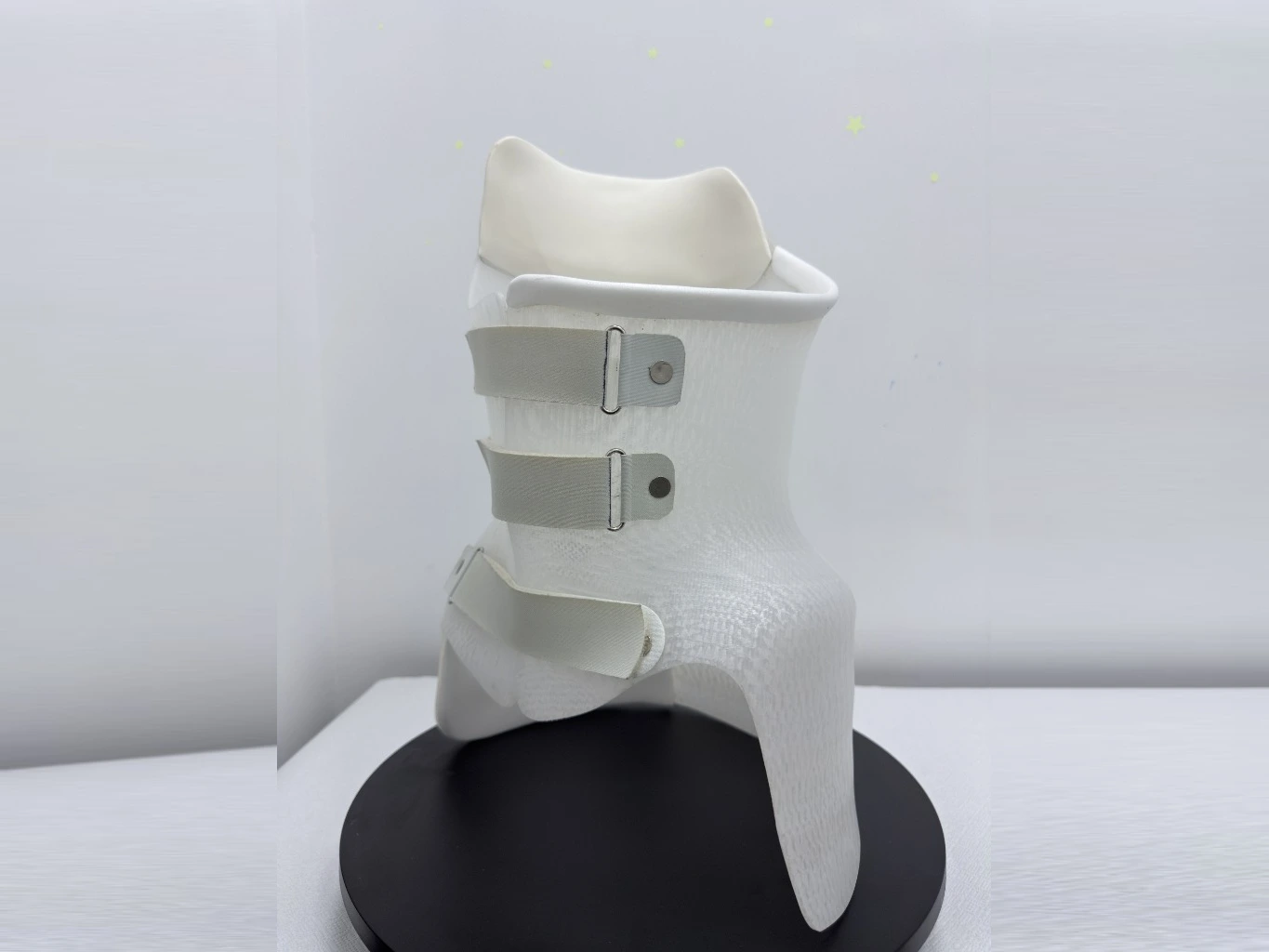
- Individualised brace geometry for specific curve pattern
- Low-profile design supporting daily school routines
- Biocompatible, lightweight clinical materials
- Adjustments performed during scheduled follow-up visits
Custom Nighttime Scoliosis Braces
Nighttime scoliosis braces are designed for selected patients whose treatment plan includes bracing during sleep. Certain nighttime systems use specialised positioning and corrective configurations intended for use while lying down in recumbent positions.
These devices are not appropriate for every scoliosis curve or patient. Suitability depends on curve type, flexibility, skeletal maturity, and specialist assessment. Standalone nighttime treatment is determined strictly by the treating healthcare professional.
Nighttime Design Considerations:
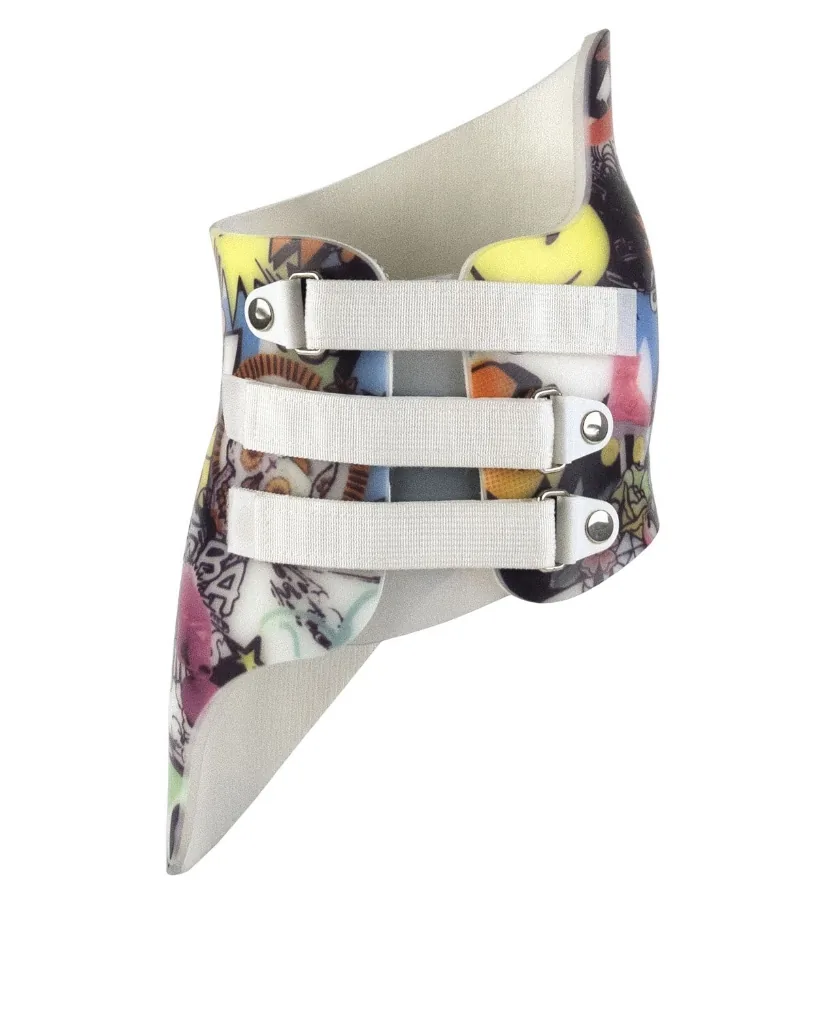
Nocturnal Scoliosis Braces
Nocturnal scoliosis braces are customised spinal orthoses designed for selected nighttime treatment requirements following specialist assessment.
Rigid & Semi-Rigid Spinal Orthoses
Rigid and semi-rigid spinal orthoses provide different levels of external support, positioning, and movement control. Specific rigid spinal braces may be used for spinal deformity management, while other spinal orthoses serve rehabilitation or general stabilization needs and should not automatically be classified as corrective scoliosis braces.
Rigid TLSO Orthoses
Thoracolumbosacral orthoses custom-designed to provide prescribed corrective forces for scoliosis curve patterns during skeletal growth.
CTLSO Spinal Systems
Cervicothoracolumbosacral orthoses that extend support to high thoracic segments, indicated only for specific clinical curve levels.
Semi-Rigid Spinal Orthoses
Spinal supports designed to limit motion and provide external stabilization; not intended as curve-corrective scoliosis braces.
Understanding Three-Dimensional Scoliosis Bracing
Scoliosis is a three-dimensional spinal deformity involving coronal lateral curvature, sagittal profile changes, and axial vertebral rotation. Scoliosis-specific orthotic design considers spinal alignment across multiple planes. Depending on the prescribed brace system, the design incorporates specific corrective contact areas, relief regions, and asymmetric torso geometry.
Curve-Specific Planning
Considering individual curve apex, spinal flexibility, and rotation during CAD-assisted orthotic design.
Corrective Contact Areas
Incorporating carefully positioned contact zones to provide prescribed derotational and corrective forces.
Relief & Expansion Regions
Providing opposite expansion voids to allow bodily movement into the corrected alignment during breathing.
Individualized Fitting
Evaluating brace positioning, pelvis clearance, pressure tolerance, and comfort during clinical review.
Scoliosis-Specific Bracing & Clinical Collaboration
Scoliosis bracing requires consideration of individual curve characteristics, skeletal growth, appropriate orthotic design, and clinical follow-up. Different established bracing approaches incorporate curve-specific design and positioning principles. The appropriate method depends on the treating specialist's recommendations and individual clinical requirements. Quantum Medical's approach focuses on personalised orthotic solutions and clear communication with relevant healthcare professionals.
The Schroth Method
A physiotherapeutic approach using scoliosis-specific exercises and individualized movement strategies. Exercises and braces are distinct; they complement each other rather than replace one another.
Rigo-Chêneau Principles
A family of scoliosis bracing design principles incorporating three-dimensional corrective forces, de-torsion pads, and designated expansion voids based on clinical curve classifications.
Gensingen Brace Concepts
A specific brace concept within the Chêneau family utilizing specialized CAD modeling. Suitability and prescription of any specific named brace depend on clinical evaluation and spine specialist guidance.
Digital Design & Custom Scoliosis Brace Fabrication
Custom scoliosis brace development requires appropriate measurements, curve-related clinical information, and individual orthotic planning. Depending on the actual process, digital scanning and CAD/CAM tools may support anatomical measurements, brace design, and manufacturing according to prescribed requirements. Technology supports device planning but does not replace clinical diagnosis or specialist radiological assessment.
Anatomical Assessment
Collecting relevant body measurements, torso surface contours, and radiographic curve data required for orthotic planning.
Digital Design (CAD/CAM)
Using CAD tools to model curve-specific contact zones, expansion relief spaces, and torso symmetry boundaries.
Brace Fabrication
Preparing the spinal orthosis using lightweight, durable medical-grade thermoplastics or composite materials.
Fitting & Adjustments
Reviewing brace positioning, pelvic hold, pressure balance, and skin clearance with ongoing clinical follow-up.
Precision 3D Custom Scoliosis Bracing in Motion
Experience the precision engineering of Quantum Medical's custom 3D scoliosis orthosis. Each brace is digitally designed to incorporate curve-specific corrective forces, expansion relief zones for rotational breathing, and smooth, anatomical contours that optimize daily comfort and compliance.
Engineered specifically to patient 3D torso topography
Targeted forces with dedicated expansion voids
Breathable, hygienic medical-grade thermoplastics
Slim profile supporting school and social activities
Important Clinical Distinction Regarding 3D Scanning & X-Rays:
An optical 3D surface scan captures external torso topography without ionising radiation. However, it cannot independently measure the internal skeletal Cobb angle or replace medical imaging when radiographs are clinically required by spine specialists to evaluate vertebral alignment.
From Clinical Assessment to Custom Brace Fitting
Scoliosis bracing requires individualised planning and appropriate coordination between healthcare professionals, patients, and families. A structured clinical process supports precise device fabrication, comfortable fitting, and ongoing growth monitoring.
Clinical Assessment
Reviewing specialist prescription, radiographic curve magnitude, skeletal maturity, and individual treatment goals.
Brace Planning
Identifying the prescribed orthotic design (daytime, nighttime, or rigid TLSO) and intended corrective objectives.
Design & Fabrication
Developing the custom brace using precision anatomical measurements, CAD modeling, and approved materials.
Fitting & Evaluation
Reviewing brace positioning, pressure distribution, skin tolerance, and providing initial adaptation guidance.
Growth Monitoring & Follow-Up
Periodic reviews to measure growth, adapt internal padding, evaluate fit, and support in-brace imaging reviews.
Scoliosis Brace Wear, Comfort & Follow-Up
The effectiveness of scoliosis bracing depends on several factors, including individual suitability, appropriate brace design, accurate clinical fitting, and adherence to the prescribed treatment programme. Wearing schedules vary according to the brace and clinical requirements.
Prescribed Wearing Schedule
Patients should strictly adhere to the daily wearing hours prescribed by their spine specialist, typically building up gradually during the initial adaptation period.
Brace Fit & Comfort
Professional fitting ensures correct strap tension and pad contact. A snug seamless undershirt is recommended to minimize friction.
Skin Monitoring
Patients and parents should inspect the skin daily. Mild redness that fades within 30–45 minutes is normal; persistent red marks or blisters require review.
Follow-Up & Growth Reviews
Growing adolescents require regular check-ups every few months to evaluate spinal growth, adjust foam pads, and check torso alignment.
Managing Scoliosis Bracing in Everyday Life
Scoliosis bracing can require adjustments to daily routines, particularly for children and adolescents. Individualised practical guidance and family support help patients understand device wear, adapt confidently, and continue active schooling and social routines.
School & Classroom Routines
Practical planning for sitting comfort, carrying school bags, and managing short brace breaks if approved by the clinician.
Clothing & Wardrobe Fit
Tips on loose-fitting tops, elasticated waistbands, and seamless base layers that comfortably conceal the brace profile.
Physical Activity & Sports
Staying active is encouraged; clinicians often permit taking the brace off for specific sports and swimming sessions.
Family & Emotional Support
Encouraging open communication, positive reinforcement, and consistent support between parents, teens, and care teams.
The Role of Scoliosis-Specific Physiotherapy
Scoliosis-specific physiotherapy may form part of a broader conservative treatment plan for selected patients. Approaches such as the Schroth method use individualised movement, postural correction, and rotational breathing techniques. For some patients, physiotherapy is applied alongside prescribed bracing under specialist coordination.
Specialist Assessment
Understanding the patient's individual spinal curve pattern, muscle imbalances, and conservative treatment eligibility.
Scoliosis-Specific Exercises
Schroth-trained physiotherapists teach individualized exercises focused on 3D spinal elongation and rotational breathing.
Coordinated Bracing & Follow-Up
Aligning brace wear hours with physical therapy routines to maintain trunk flexibility, strength, and compliance.
Scoliosis Bracing Beyond Adolescent Care
Although scoliosis bracing is commonly associated with growing adolescents, adults may also use selected spinal orthoses for specific clinical purposes. Adult degenerative scoliosis requires different treatment considerations, focusing on external trunk support and symptom management rather than structural curve correction. Management of congenital and neuromuscular scoliosis also requires individualized specialist assessment.
For information regarding general lumbar orthoses, chairback braces, and conservative back pain support, please explore our Spine & Back Braces.
Supporting Scoliosis Care Professionals Across the UAE
Quantum Medical welcomes collaboration with healthcare professionals involved in scoliosis assessment, orthotic management, and rehabilitation across Abu Dhabi and the UAE. Our approach focuses on individualized device planning, technical coordination, and clear clinical communication.
Frequently Asked Questions About Scoliosis Bracing
Clear, patient-friendly and medically responsible answers to common scoliosis bracing enquiries.
Explore Related Spinal & Orthotic Solutions
Discover our broader range of spinal, pediatric, and custom rehabilitation orthotic solutions.
Looking for a Custom Scoliosis Bracing Solution?
Whether you are a parent exploring scoliosis brace options, an individual seeking information, or a healthcare professional discussing a prescribed spinal orthosis, Quantum Medical welcomes your enquiry. Contact our team to learn about available brace designs, individual requirements, and appropriate next steps.