Prosthetic Sockets & Liners in Abu Dhabi, UAE
Personalized Socket Design, Protective Liners & Prosthetic Suspension Solutions
Quantum Medical provides prosthetic socket, liner, and suspension solutions developed according to individual anatomical, functional, and fitting requirements. Based in Abu Dhabi, UAE, our approach focuses on appropriate socket design, material selection, and prosthetic interface customization. We combine relevant clinical information with suitable design and fabrication methods to support individualized prosthetic fitting and mobility needs.
What Are Prosthetic Sockets & Liners?
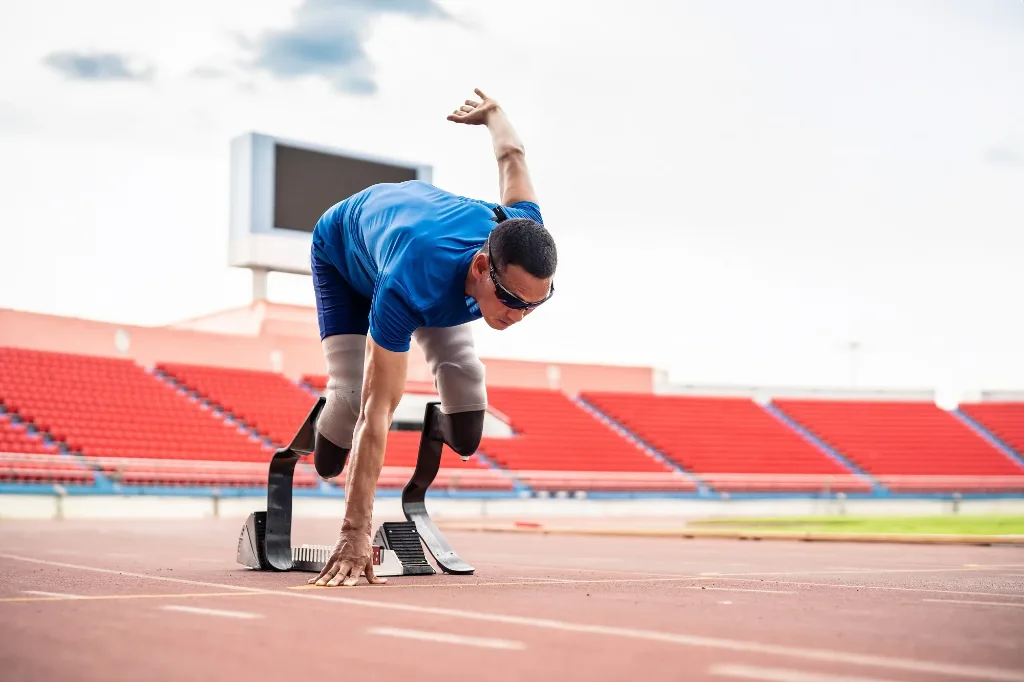
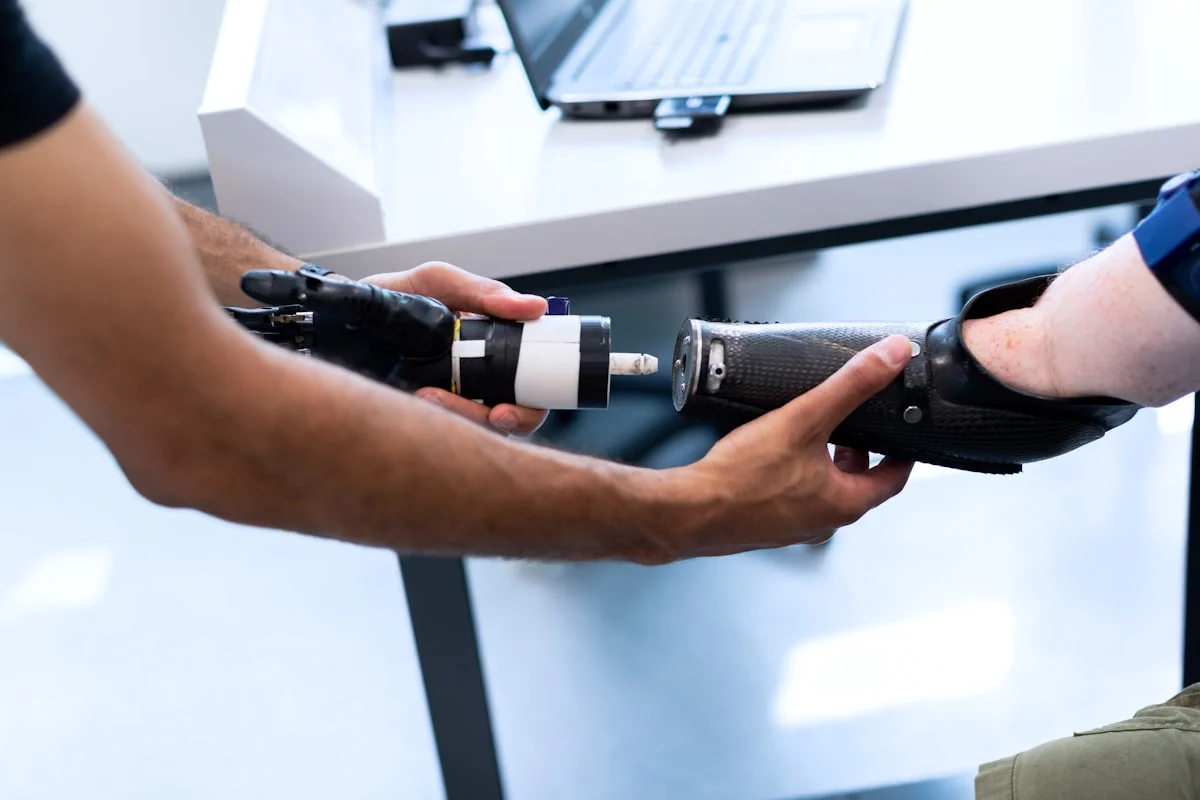
A prosthetic socket is the primary interface connecting a residual limb to the prosthetic device. Its design is an important consideration for load transfer, device control, support, and suspension.
Prosthetic liners are flexible interface products used in many prosthetic systems between the residual limb and socket. Depending on the material and design, liners may provide cushioning, assist with suspension, or help manage contact between the skin and prosthetic socket.
Suspension systems help maintain the prosthesis in position during intended activities. Socket, liner, and suspension selection depends on residual limb anatomy, skin and tissue condition, functional requirements, and professional assessment.
Individualized Socket Design
Tailored to specific residual limb contours, tissue volume, and bone landmarks to support comfortable load-bearing.
Appropriate Load Distribution
Managing load transfer across pressure-tolerant areas while relieving sensitive bony prominences and scars.
Prosthetic Suspension & Stability
Utilizing pin-lock mechanisms, suction valves, or active vacuum to help keep the device securely connected.
Fitting & Follow-Up Support
Comprehensive diagnostic check fitting, dynamic alignment trials, and ongoing clinical reviews as limb volume changes.
Our Prosthetic Socket, Liner & Suspension Solutions
Explore our eight dedicated clinical solutions across custom socket engineering, protective material liners, and prosthetic suspension systems.
Specific Weight-Bearing Prosthetic Sockets
Prosthetic socket designs engineered to direct weight-bearing pressure primarily toward pressure-tolerant anatomical regions while relieving sensitive bony prominences, scars, and fragile tissue areas.
Main Purpose
Targeted biomechanical load transfer for individuals with distinct pressure-sensitive regions, delicate grafts, or unique anatomical contours requiring localized relief.
Key Considerations
- Accurate identification of pressure-tolerant regions (e.g., patellar tendon in transtibial sockets)
- Careful contouring and relief over sensitive bony landmarks and nerves
- Individualized residual limb shape and tissue consistency evaluation
- Appropriate carbon-fiber composite or thermoplastic structural rigidity
Total Surface Weight-Bearing (TSB) Prosthetic Sockets
Sockets engineered to distribute load more uniformly across the entire surface area of the residual limb rather than concentrating weight-bearing forces onto isolated anatomical regions.
Main Purpose
Broad surface contact aimed at promoting balanced pressure distribution, enhanced proprioceptive awareness, and stable limb-socket contact dynamics during dynamic gait.
Key Considerations
- Requires precise volumetric matching to avoid localized focal pressures
- Dependent on consistent soft tissue tolerance across the residual limb
- Commonly paired with vacuum, suction, or elastomeric liner interfaces
- Routine clinical monitoring for volume and shape fluctuations
Silicone Prosthetic Liners
Medical-grade silicone liners engineered with material stability to manage shear stresses, provide a resilient mechanical interface, and support dependable suspension engagement.
Main Purpose
A durable, stable interface for moderate to active individuals who prioritize positive suspension retention and high mechanical control over rotational forces.
Key Considerations
- High elastic memory resists permanent material packing under dynamic loads
- May feel firmer over prominent bony structures compared to softer gel liners
- Available in locking (pin-lock) or cushion configurations with exterior matrix fabrics
- Requires consistent skin care and adherence to daily hygiene regimens
Thermoplastic Elastomer (TPE) Prosthetic Liners
Flexible prosthetic interface products designed with soft gel formulations that adapt smoothly to irregular residual limb contours and offer gentle tissue accommodation.
Main Purpose
Gentle interface cushioning for individuals with irregular anatomical shapes, skin sensitivity, or scarring requiring soft material compliance.
Key Considerations
- High conformability allows the gel to flow gently around bony prominences
- Certain manufacturer models incorporate skin-conditioning agents or mineral oils
- Material may exhibit gradual thickness change (packing) over extended high-impact wear
- Requires adherence to manufacturer temperature limits and storage instructions
Polyurethane (PU) Prosthetic Liners
Advanced viscoelastic interface products with unique flow characteristics that redistribute pressure dynamically under load, accommodating sensitive bony landmarks.
Main Purpose
Hydrostatic pressure redistribution and impact accommodation, particularly beneficial for sensitive residual limbs or active and passive vacuum socket configurations.
Key Considerations
- Viscoelastic properties allow the liner to flow away from high-pressure zones
- Requires a precisely contoured socket to maintain uniform hydrostatic contact
- Provides an exceptional airtight seal for elevated vacuum suspension systems
- Care and cleaning instructions must follow manufacturer guidelines closely
Shuttle Lock (Pin-Lock) Suspension
A mechanical suspension system that utilizes a compatible liner with a distal threaded pin that engages into an audible locking mechanism inside the socket distal base.
Main Purpose
Predictable mechanical attachment with intuitive donning and push-button release for individuals seeking clear tactile and audible confirmation of suspension.
Key Considerations
- Ensures dependable mechanical connection between liner and socket
- Requires accurate alignment of the distal pin during the donning process
- Distal tissue must tolerate localized tensile forces during swing phase
- Lock mechanism requires periodic inspection and clearing of debris
Passive Vacuum & Suction Suspension Systems
Suspension systems that utilize pressure differences to maintain intimate socket retention, utilizing airtight sealing sleeves, seal-in liners, or expulsion valves.
Main Purpose
Eliminates distal pin traction and distributes suspension forces across the residual limb surface, promoting stable limb-to-socket contact during daily ambulation.
Key Considerations
- Requires an airtight socket seal maintained by sleeves or liner seals
- One-way expulsion valve vents air during weight-bearing and prevents re-entry
- Reduces relative movement between limb and socket during gait swing phase
- Sealing components must be kept clean and inspected for micro-punctures
Active Vacuum Prosthetic Suspension
Advanced suspension technology utilizing a mechanical stride-activated pump or electronic micro-pump to generate and actively regulate sub-atmospheric pressure inside the socket.
Main Purpose
Designed to support appropriate prosthetic suspension and interface management according to individual clinical needs, helping stabilize residual limb volume throughout wear.
Key Considerations
- Maintains consistent elevated negative pressure across the entire socket surface
- Mechanical pumps generate vacuum during gait cycles; electronic pumps run on rechargeable power
- Helps manage residual limb volume fluctuations and reduces relative socket motion
- Requires strict adherence to socket seal maintenance and pump operating instructions
Understanding Prosthetic Liner Material Options
Prosthetic liner material characteristics vary significantly between manufacturers, gel formulations, and individual anatomical needs. No single material is universally superior for every patient; selection requires professional clinical assessment balancing cushioning, shear management, limb shape, and suspension choice.
| Material | General Characteristics | Selection Considerations | Professional Assessment |
|---|---|---|---|
Silicone Liners Mechanical Stability | High structural stability, firm elastic memory, excellent tear resistance, and durable mechanical shape retention under repetitive dynamic loading. | Favored by individuals requiring positive mechanical coupling, firm stability, and high durability. May feel firmer on prominent bony landmarks. | Evaluated during clinical consultation based on physical activity requirements, suspension choice (pin vs suction), and tissue pressure tolerance. |
Thermoplastic Elastomer (TPE) Soft Conformity | Soft, flexible gel formulation with high conformability to anatomical contours. Selected manufacturer models incorporate skin-conditioning agents or mineral oils. | Accommodates irregular residual limb contours, scar tissue, and sensitive skin. May exhibit gradual compression packing under high-impact sports forces. | Assessed by the clinical prosthetist for individuals with sensitive skin, scarring, or irregular limb shapes engaged in low-to-moderate activities. |
Polyurethane (PU) Viscoelastic Flow | Viscoelastic flow behavior that redistributes pressure dynamically away from peak loading areas, with high shock-absorbing compliance and airtight sealing. | Provides uniform hydrostatic pressure redistribution and exceptional vacuum seal integrity. Requires precisely contoured custom sockets. | Prescribed when custom elevated vacuum or precise hydrostatic load dispersion is indicated for bony limbs or active vacuum suspension protocols. |
Silicone Liners
Mechanical StabilityGeneral Characteristics
High structural stability, firm elastic memory, excellent tear resistance, and durable mechanical shape retention under repetitive dynamic loading.
Selection Considerations
Favored by individuals requiring positive mechanical coupling, firm stability, and high durability. May feel firmer on prominent bony landmarks.
Professional Assessment
Evaluated during clinical consultation based on physical activity requirements, suspension choice (pin vs suction), and tissue pressure tolerance.
Thermoplastic Elastomer (TPE)
Soft ConformityGeneral Characteristics
Soft, flexible gel formulation with high conformability to anatomical contours. Selected manufacturer models incorporate skin-conditioning agents or mineral oils.
Selection Considerations
Accommodates irregular residual limb contours, scar tissue, and sensitive skin. May exhibit gradual compression packing under high-impact sports forces.
Professional Assessment
Assessed by the clinical prosthetist for individuals with sensitive skin, scarring, or irregular limb shapes engaged in low-to-moderate activities.
Polyurethane (PU)
Viscoelastic FlowGeneral Characteristics
Viscoelastic flow behavior that redistributes pressure dynamically away from peak loading areas, with high shock-absorbing compliance and airtight sealing.
Selection Considerations
Provides uniform hydrostatic pressure redistribution and exceptional vacuum seal integrity. Requires precisely contoured custom sockets.
Professional Assessment
Prescribed when custom elevated vacuum or precise hydrostatic load dispersion is indicated for bony limbs or active vacuum suspension protocols.
Understanding Residual Limb Volume & Socket Fit
Residual limb shape and volume may change over time. These changes can influence socket contact, pressure distribution, suspension security, and overall prosthetic fit.
An appropriate socket design and fitting approach considers the individual's residual limb characteristics and functional requirements. Changes in fit require professional clinical assessment, socket adjustments, or other appropriate interventions.
Residual Limb Anatomy
Socket design carefully evaluates the unique bone structure, soft tissue distribution, limb length, and tissue mobility of the remaining limb to guide personalized contouring.
Pressure Distribution
Appropriate fitting aims to manage load transfer and contact pressures according to individual tissue tolerance, offloading sensitive areas while loading tolerant zones.
Volume Changes
Residual limb shape and volume fluctuate naturally due to fluid shifts, muscle conditioning, and postoperative remodeling, influencing socket contact and suspension.
Skin & Tissue Condition
Skin integrity, surgical scars, skin grafts, and pressure tolerance are vital clinical factors that guide liner material selection, thickness, and socket relief contours.
Personalized Prosthetic Socket Design & Fabrication
Prosthetic socket development requires appropriate measurements, interface planning, material selection, and individual fitting considerations. Depending on the socket type and clinical requirements, digital tools may support different stages of design and fabrication, including optical measurements, CAD/CAM-assisted contouring, and advanced carbon lamination, alongside essential clinical expertise.
Anatomical Measurement
Precise residual limb measurements, optical surface geometry, and anatomical landmark data are captured to guide socket planning.
Digital Design (CAD/CAM)
Computer-assisted design software supports precise socket contouring, pressure-relief modifications, and biomechanical alignment.
Socket Fabrication
Advanced carbon-fiber composite lamination, lightweight thermoplastics, and structural resins are selected according to individual clinical demands.
Fitting & Adjustment
Diagnostic check sockets evaluate intimate fit, suspension integrity, and comfort during dynamic walking trials before final lamination.
From Assessment to Individualized Prosthetic Fit
The development of an appropriate prosthetic interface involves understanding individual anatomy, device requirements, and functional goals through five coordinated clinical steps.
Assessment & Requirements
Reviewing residual limb measurements, tissue characteristics, suspension needs, activity goals, and referring medical recommendations.
Socket & Interface Planning
Collaborative selection of socket design (Specific vs TSB), liner material (Silicone, TPE, PU), and suitable suspension method.
Design & Fabrication
Precision socket contouring and laboratory fabrication utilizing high-grade carbon composites, thermoforming, and precision alignment.
Fitting & Evaluation
Comprehensive evaluation of socket contact, tissue pressure tolerance, suspension security, and functional gait dynamics.
Adjustments & Follow-Up
Fine-tuning pressure relief, monitoring residual limb volume fluctuations, reviewing liner care, and scheduling regular follow-ups.
Prosthetic Liner Care, Skin Health & Follow-Up
Appropriate liner hygiene, residual limb skin monitoring, socket maintenance, and professional follow-up are essential aspects of prosthetic use. Different liners and suspension systems have product-specific care protocols.
Liner Hygiene
Clean your prosthetic liner daily with mild, fragrance-free soap and warm water as recommended by the manufacturer. Rinse thoroughly and dry completely to maintain skin cleanliness.
Residual Limb Skin Monitoring
Inspect the skin of your residual limb daily. Changes such as persistent redness, blisters, skin breakdown, or unusual irritation should be evaluated promptly by your prosthetist.
Socket Fit & Comfort
Changes in socket comfort, rotation, or feeling of bottoming out may indicate limb volume fluctuations that require professional fitting review rather than unsupervised modifications.
Regular Follow-Up
Residual limb shapes, liner elasticity, and suspension components evolve over time. Scheduled clinical follow-ups ensure your prosthetic interface remains safe, comfortable, and functional.
Supporting Prosthetic Care Professionals Across the UAE
Quantum Medical welcomes collaboration with healthcare professionals involved in prosthetic rehabilitation, socket fitting, and mobility support. Our approach emphasizes individualized device planning, appropriate technical coordination, and clear communication with clinical teams across Abu Dhabi and the UAE.
Frequently Asked Questions About Prosthetic Sockets & Liners
Explore Related Prosthetic Solutions
Looking for a Personalized Prosthetic Socket or Liner?
Whether you are a healthcare professional exploring prosthetic interface options or an individual seeking information about socket fitting, liners, or suspension systems, Quantum Medical welcomes your enquiry. Contact our team to discuss available solutions and individual requirements.